The Syntoria Institute
The Architecture of Human Growth
The Syntoria Framework is an advanced specialization designed to help experienced practitioners understand and guide executive growth.
The Next Evolution of Coaching
We are living through a golden age of scientific discovery. Every day, new insights emerge in neurobiology, systems theory, and behavioral science that explain how humans actually grow. Yet, the practice of coaching remains largely disconnected from these advances. Most training relies on established models or pure intuition. While intuition is the core of authentic coaching, high-level executives demand surgical precision and rapid results grounded in solid theory.
The Approach
The Syntoria Framework translates abstract scientific principles into a tangible, visual architecture. By mapping human patterns onto a clear model, you make the invisible mechanics of growth visible.This replaces subjective guesswork with diagnostic precision—granting you the operational clarity to intervene with total confidence.

The Integrated Architecture
Science typically explores human growth in silos—isolating the mind, the body, or the environment. The Syntoria Framework reconnects them into a single, functional model. The model reveals exactly how these layers interconnect to form specific patterns. It grants you a sharp, systemic overview of the client's reality, equipping you with a precise methodology to identify the leverage point and operate fast, sustainable changes.
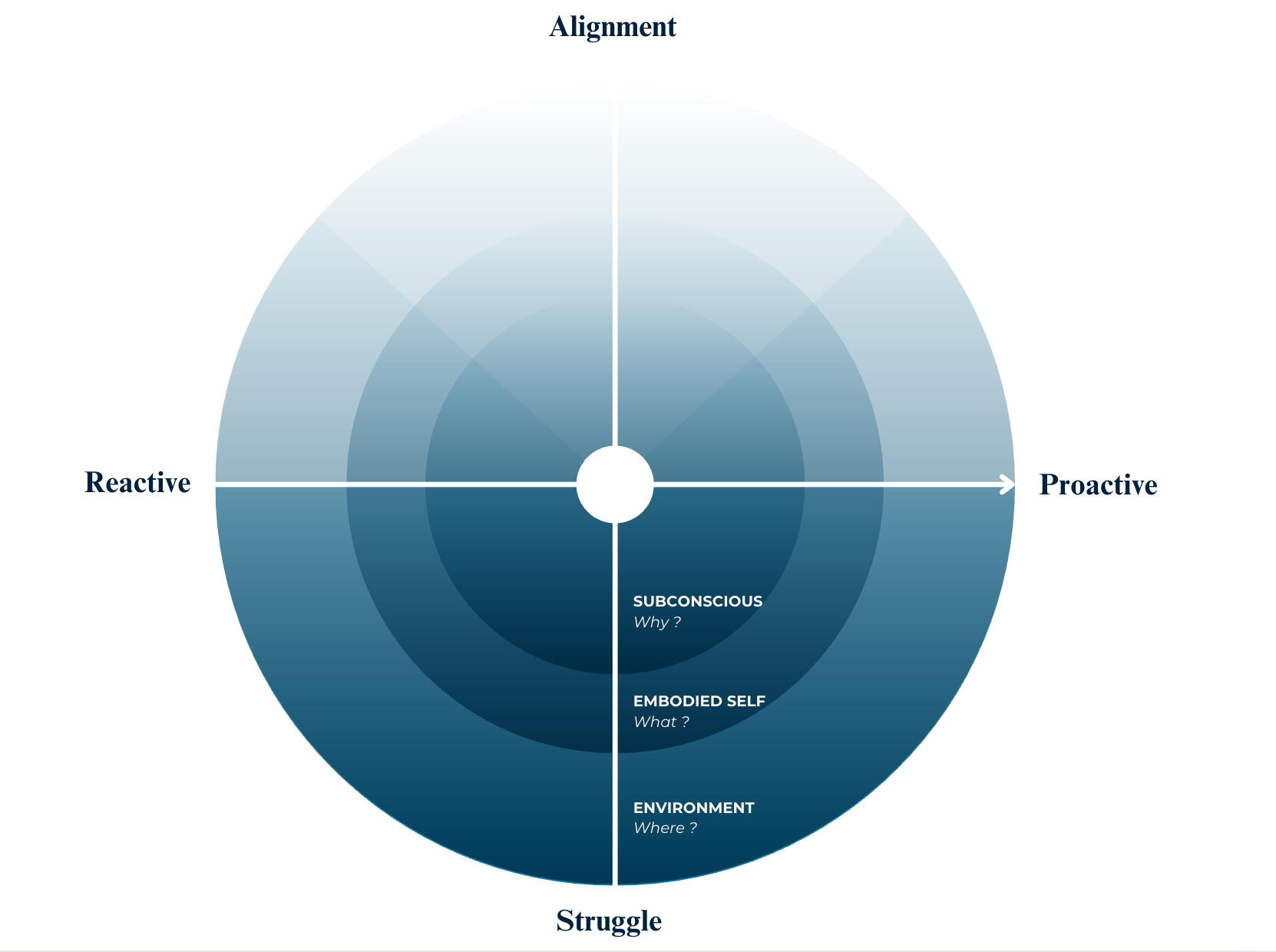
We view the human being as a systemic entity across three interconnected layers
The Environment (Systemic Context)
Based on Sociology & Systems Theory
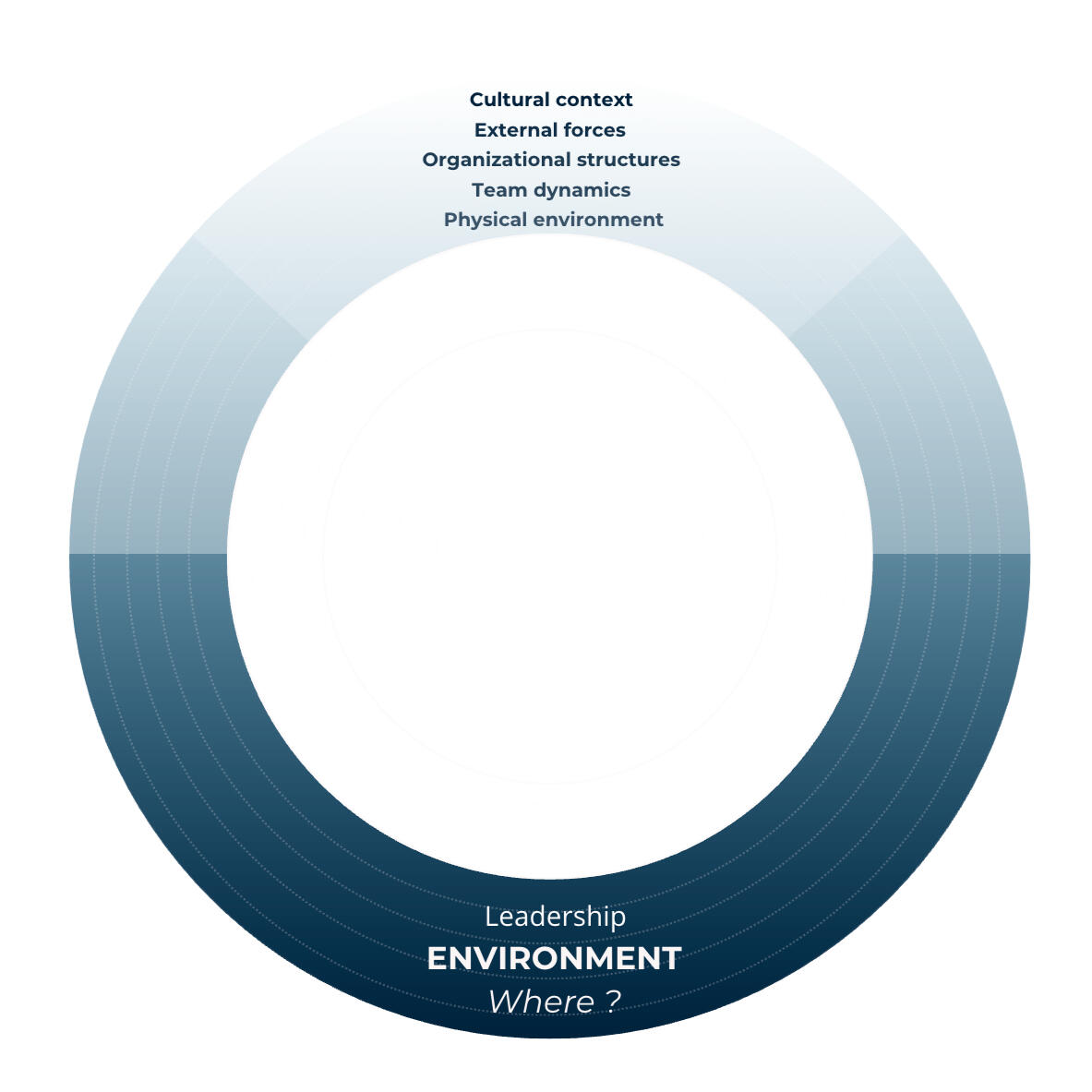
Reveals the precise influence of context
It enables us to understand exactly how external forces—from organizational culture to team dynamics—are shaping, constraining, or amplifying the leader's behavior.
The Embodied Self (Visible Expression)
Based on Neuroscience & Biology
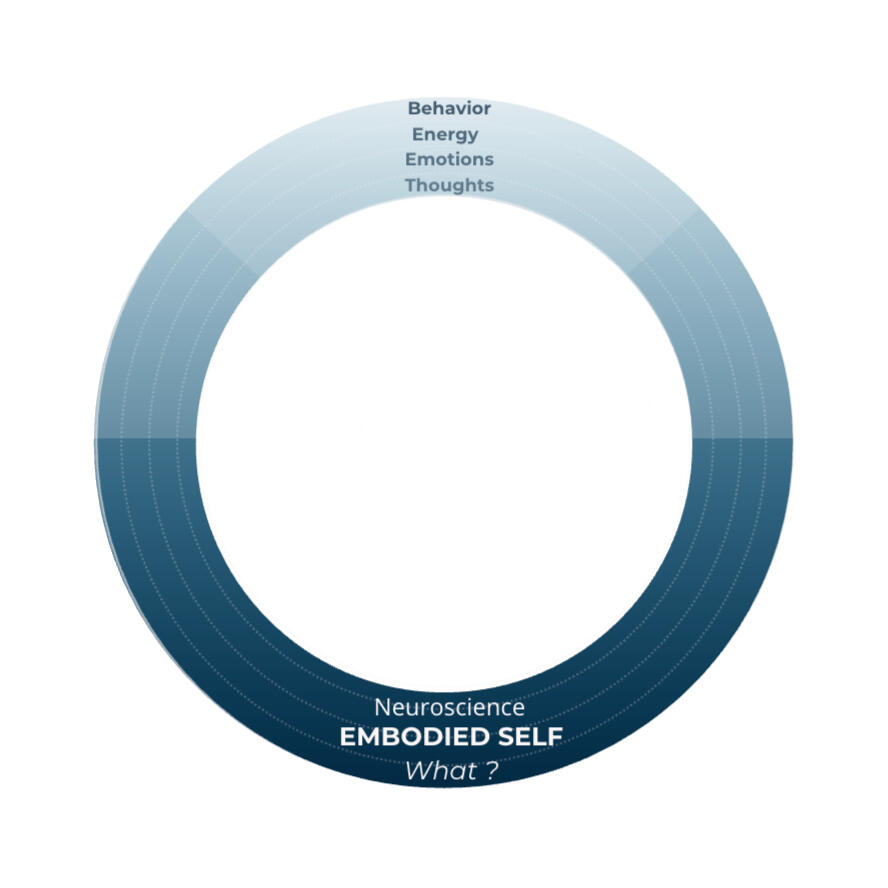
Clarifies exactly how the pattern manifests
By observing the somatic and behavioral output, we read the complete observable signal, anchoring the diagnostic in reality and guiding the physical integration of the new pattern.
The Subconscious (Deep Drivers)
Based on Advanced Psychology
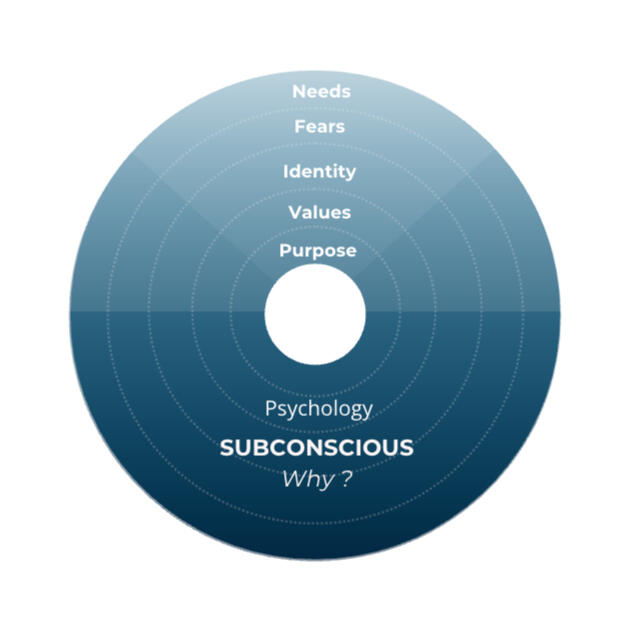
Decodes the "why" behind the pattern
It identifies the invisible drivers sustaining the current loop, revealing the optimal lever to anchor the new one.

The Executive Standard
High-level stakeholders operate in a world of logic, strategy, and measurable outcomes. They often view traditional coaching as opaque or abstract.The Syntoria Framework bridges this gap. Because the model is visual and logical, you can articulate exactly what you are diagnosing and why the intervention works. This clarity respects their scarcest asset: time. Leaders cannot afford open-ended exploration with no clear trajectory.By delivering surgical precision, you position yourself not just as a coach, but as a high-performance asset mastering the mechanics of growth.
Beyond the Basics: An Advanced Specialization
This specialization is for practitioners who
Already operate beyond foundational coaching skills.
Work with senior leaders and recognize the limits of intuition and soft skills alone.
Require a framework grounded in neuroscience, psychology, and systems science to make human growth readable across context, body, and inner drivers.
Are prepared to operate with greater precision, responsibility, and consequence.


The Founder
Sébastien Tomàs
Expert in Executive Growth, HEC Paris Institute
The Syntoria Institute formalizes more than a decade of work on how human change operates at executive level.With a background as CEO and founder, Sébastien has spent over fifteen years working with leaders across contexts—from emerging leadership to the C-Suite—analyzing patterns where growth, decision-making, and pressure intersect.Confronted with the limits of existing models, he dedicated several years to structuring a coherent framework. Drawing from neuroscience, psychology, systems theory, and field practice, he established a unified, visual architecture to read human patterns and intervene with precision.
NEXT COHORT: PRIORITY ACCESS
Cohorts are intentionally limited to preserve rigor and depth.
Access the full syllabus and priority information for the next cohort.
© The Syntoria Institute. All rights reserved.
Growth Efficiency :
a key Predictor of Performance
Grounded in 650+ peer-reviewed studies. Benchmarked against High-Performing Organizations (HPOs).
Research consistently identifies Growth Efficiency—the speed at which leaders adapt strategies and behaviors under pressure—as a primary driver of organizational resilience and cycle time.The LGI is a diagnostic instrument, not a survey. It isolates the specific structural constraints—environmental, behavioral, and subconscious—that limit a leader's trajectory. We provide clarity on the single highest-leverage lever to accelerate performance.
The Limitations of Descriptive Feedback
Why traditional multi-rater assessments fail to drive behavioral change
Most executive assessments function as report cards. They list behavioral competencies—identifying what a leader is doing, but failing to explain why.For a high-stakes leader, this creates "data noise": exhaustive lists of strengths and weaknesses that lack a causal diagnosis. Without understanding the root drivers, leaders cannot distinguish between a skill gap, a structural constraint, or a subconscious pattern.The LGI moves beyond description. By distinguishing between the leader’s internal capacity and the organization’s environmental friction, we replace static observation with actionable, architectural insight.
| Standard 360° Assessment | Leader Growth Index (LGI)™ |
|---|---|
| Focus : Behavioral Competencies | Focus : Growth Efficiency & Capacity |
| Output : Descriptive "Report Card" | Output : Diagnostic Roadmap |
| Action : Broad improvements | Action : Single Point of Intervention |
| Depth : Visible Behavior | Depth : Environment, Behavior, & Drivers |
Predictive Validity
Leadership is observable. Growth is measurable. Performance is predictable.
High-Performing Organizations (HPOs) do not rely on intuition. They rely on evidence.The LGI framework is grounded in a 40-year baseline of longitudinal research across neuroscience and organizational psychology. It identifies the "critical few"—the specific levers that reliably distinguish top-tier leadership from average performance.Data confirms that higher Growth Efficiency is not just a soft skill ; it is a business driver. It correlates directly with :- Decision Quality : The ability to process variables and commit to a course of action under uncertainty.
- Organizational Velocity : Shorter execution cycles and faster adaptation to market shifts.
- Talent Retention : Lower attrition risk and higher engagement in high-potential teams.Built on established frameworks including Self-Determination Theory, Goal-Setting Theory, and Contextual Behavioral Science.
The Anatomy of Performance
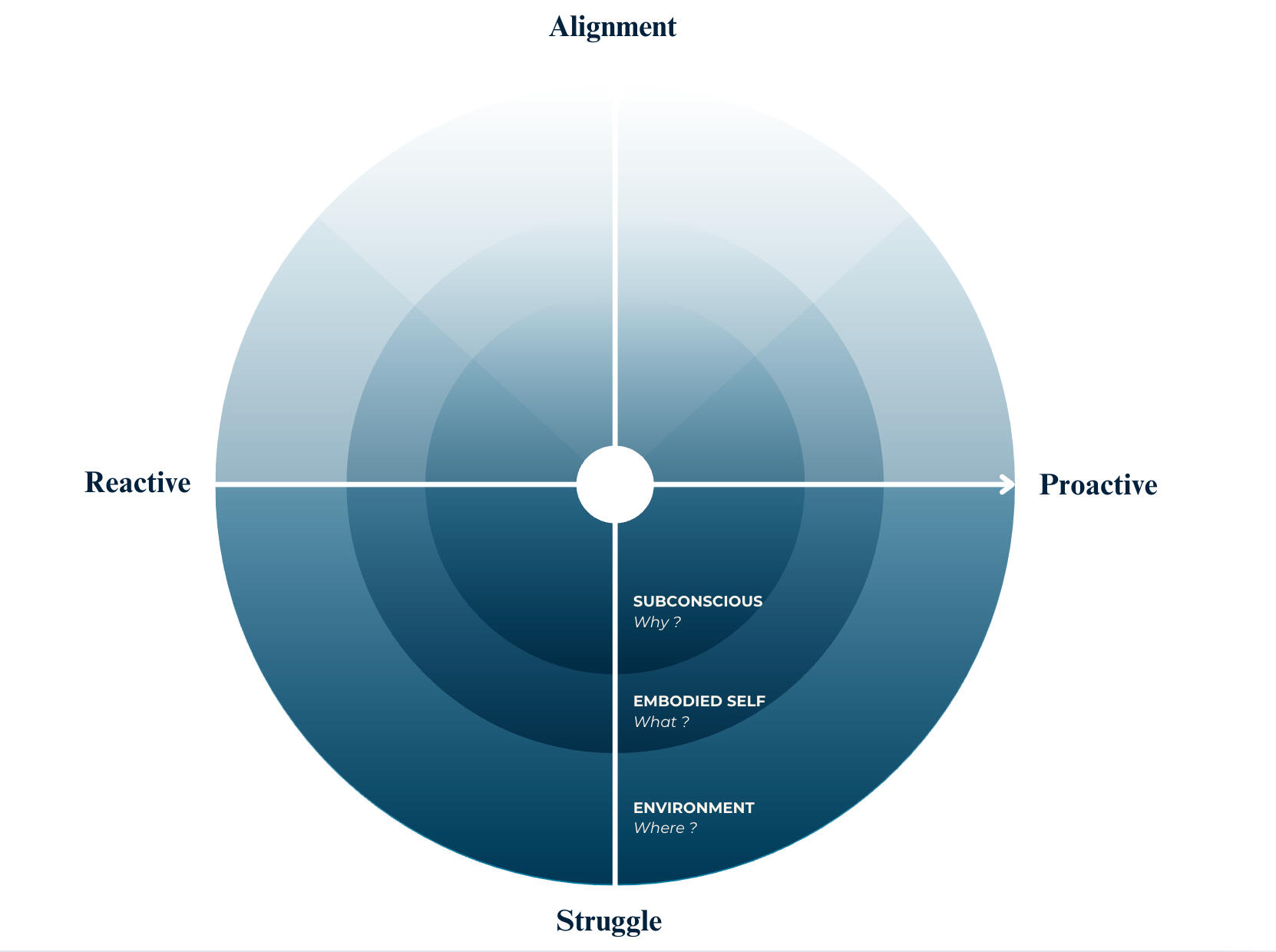
Behavior is only the visible signal.
To change the trajectory, we must map the root architecture.
Our methodology integrates data across three vertical layers. By triangulating the leader’s internal drivers with their external context, we distinguish between a skill gap, a motivation deficit, or an environmental constraint.
The 3 Diagnostic Layers
The Environment (Where)
Context & Friction
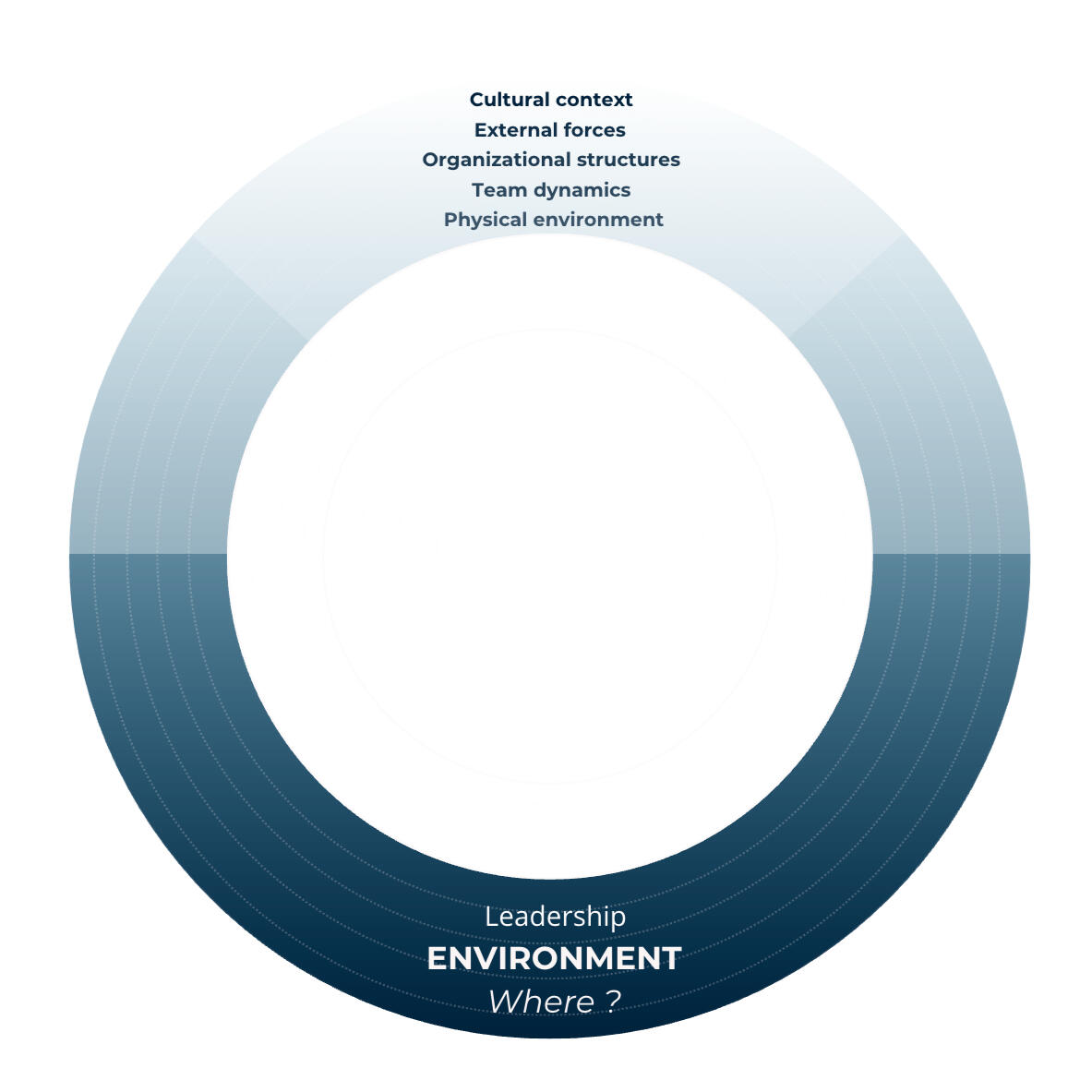
We assess the organizational ecosystem surrounding the leader. Is the environment amplifying their impact or creating structural drag? This measures the "Ease" of execution.
The Embodied Self (What ?)
Behavior & Mechanics
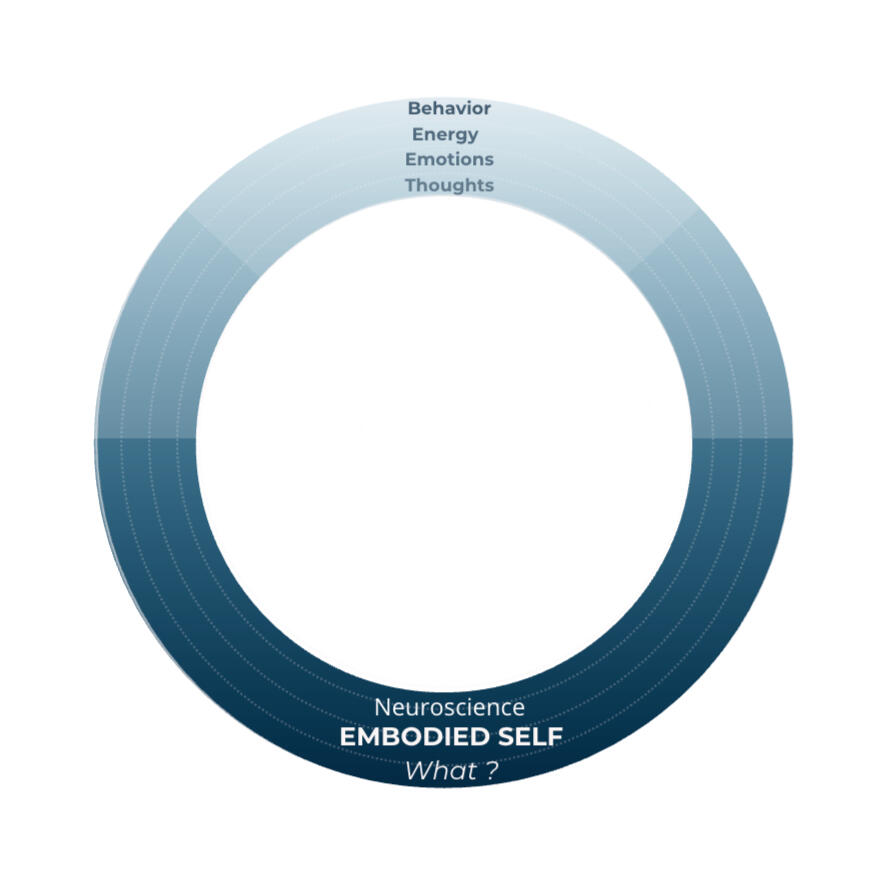
The observable layer of leadership. We measure the "Actions" and "Capabilities" currently in play—from decision clarity and emotional regulation to presence and communication patterns.
The Subconscious (Why ?)
Drivers & Patterns
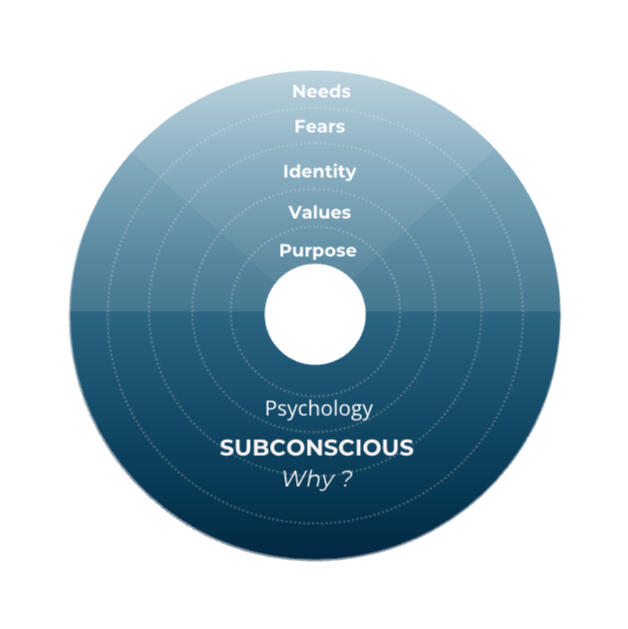
The internal operating system. We decode the hidden drivers, limiting beliefs, and protective mechanisms that generate the visible behavior. This reveals the root cause of performance plateaus.
This analysis is synthesized through a proprietary hybrid process: algorithmic pattern recognition for precision, verified by expert consultant diagnostics for context.

Diagnostic Intelligence
The LGI provides a strategic blueprint for accelerating leader development.
We deliver a Diagnostic Blueprint. Every assessment is synthesized into a forensic profile that separates signal from noise, allowing stakeholders to bypass "broad improvements" and focus resources on the specific mechanics that drive the leader's growth trajectory.
The Output Module
The Efficiency Audit
A quantitative analysis of the leader's Growth Efficiency.
- We measure the precise gap between a leader's Capability (skill and knowledge) and their Execution (consistency under pressure).
The Primary Constraint
We identify the single highest-leverage bottleneck to development.
- Whether the friction is an Environmental constraint or an Internal driver, we isolate the specific lever that will yield the highest ROI.
Strategic Impact Forecast
A predictive analysis of how current patterns affect the wider organization.
- We map how specific leadership behaviors are influencing team velocity, decision quality, and talent retention.
Deployment Protocol
Strictly confidential.
Managed end-to-end by a Certified Growth Architect.
Context determines meaning. To ensure the diagnosis is accurate, every deployment is overseen by a selected practitioner.We integrate quantitative LGI data with qualitative insights from confidential interviews, ensuring the final blueprint reflects the full reality of the leader’s ecosystem rather than just a set of scores.
The Protocol Steps
01. Ecosystem Mapping: We identify the critical stakeholders who influence and are impacted by the leader.
02. The Diagnostic Scan: A dual-track assessment combining the LGI questionnaire with targeted interviews.
03. Pattern Synthesis: The Architect triangulates environment, behavior, and subconscious drivers into a unified profile.
04. Strategic Debrief: A private executive briefing to review the blueprint and define the growth trajectory.
Deployment Protocol
Strictly confidential.
Managed end-to-end by a Certified Growth Architect.
Context determines meaning. To ensure the diagnosis is accurate, every deployment is overseen by a selected practitioner.We integrate quantitative LGI data with qualitative insights from confidential interviews, ensuring the final blueprint reflects the full reality of the leader’s ecosystem rather than just a set of scores.
The Protocol Steps
01. Ecosystem Mapping: We identify the critical stakeholders who influence and are impacted by the leader.
02. The Diagnostic Scan: A dual-track assessment combining the LGI questionnaire with targeted interviews.
03. Pattern Synthesis: The Architect triangulates environment, behavior, and subconscious drivers into a unified profile.
04. Strategic Debrief: A private executive briefing to review the blueprint and define the growth trajectory.

The ROI of Growth Efficiency
A leading indicator of organizational resilience and speed.
In a volatile market, competitive advantage belongs to organizations that adapt fastest. By isolating the structural constraints on leadership performance, the LGI allows organizations to intervene before inefficiency becomes stagnation.
The Outcomes
Strategic Agility
Unblocking the "Clarity" lever allows leadership teams to pivot faster when market conditions shift.
Operational Throughput
Identifying Environmental constraints ("Ease") removes the systemic friction that slows down daily execution.
Sustainable Performance
Sustainable Performance
Balancing "Drive" and "Psychological Flexibility" prevents burnout and ensures durable high performance over time.
Deploy the Diagnostic
Identify the primary growth constraints within your executive team.
FOR LEADERSHIP COACHES
From MIND to HEART™
Create faster impact with executive clients
A free 3-hour in-person training on how to create a state shift in the first 15 minutes of executive coaching.
| FORMAT | DURATION | PRICE | CAPACITY | CITIES |
|---|---|---|---|---|
| In-person | 3 hours | Free | 12 per session | European rollout |
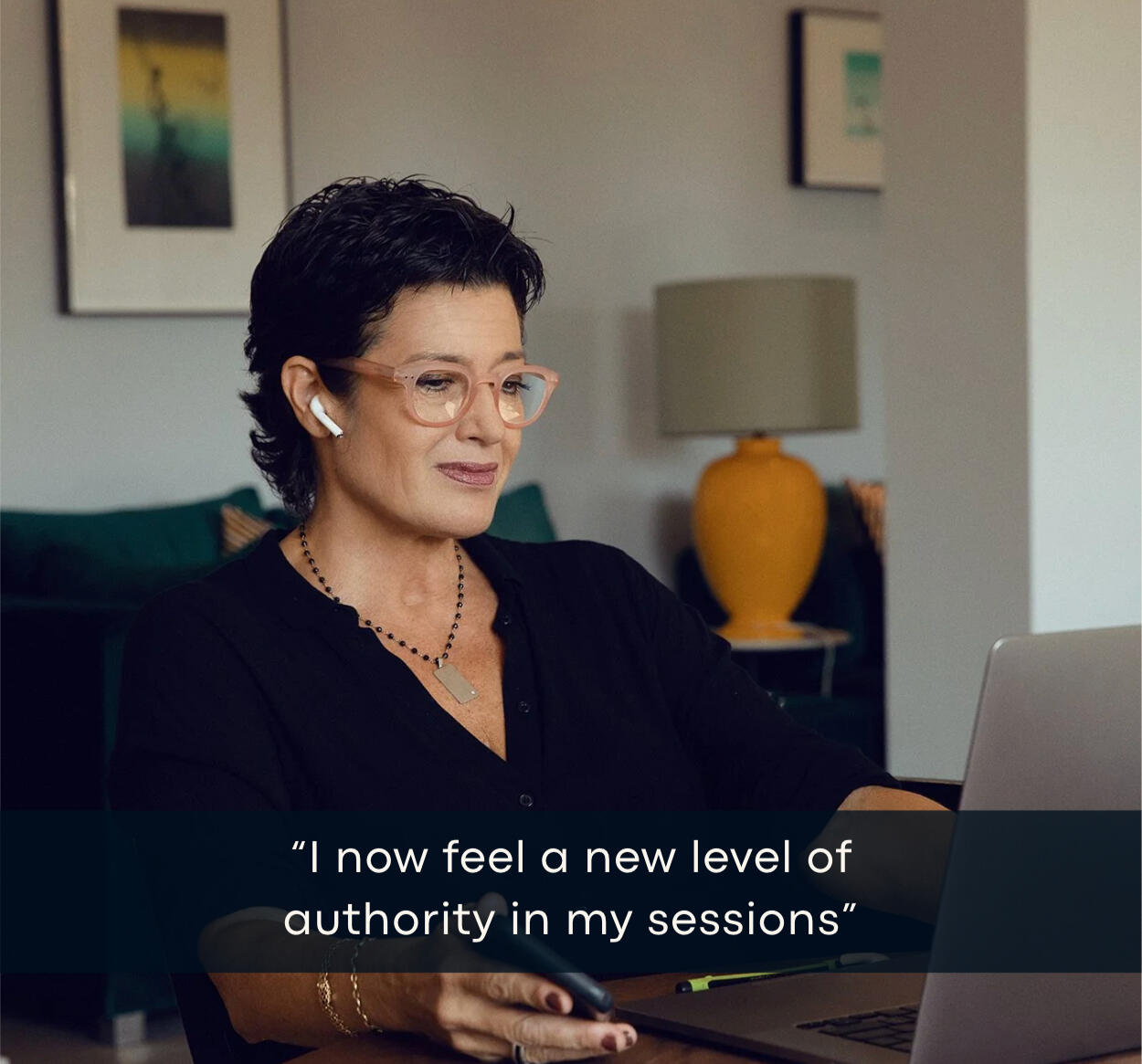
— Jessika Klingspor
Executive Coach & Ecosystem Builder
Founder, Nordics in Barcelona
What coaches say after the training
"With high-level, rational leaders, usual coaching frameworks are not enough to invite vulnerability. They need to be actively guided into a more receptive and open state.From MIND to HEART™ brought me the scientific grounding and the visual map I needed to understand how to create a powerful state shift almost immediately. I can now confidently guide my clients out of cognitive control and into heart-centered vulnerability much faster than I thought possible.The training itself was a complete experience—I spent three hours in a state of flow where time just stood still. For any coach looking to build immediate credibility with analytical minds, I highly recommend this work."
The Executive Paradox
They want results, but stay on the surface
Executives expect fast, visible progress while keeping the conversation safe, controlled, and highly cognitive.
As a result, many coaches struggle to reach depth in the first sessions.
They lose time waiting for vulnerability to emerge, instead of creating the conditions for it.
The result is often the same: slower impact, weaker authority, and delayed depth.
The 15-Minute Shift
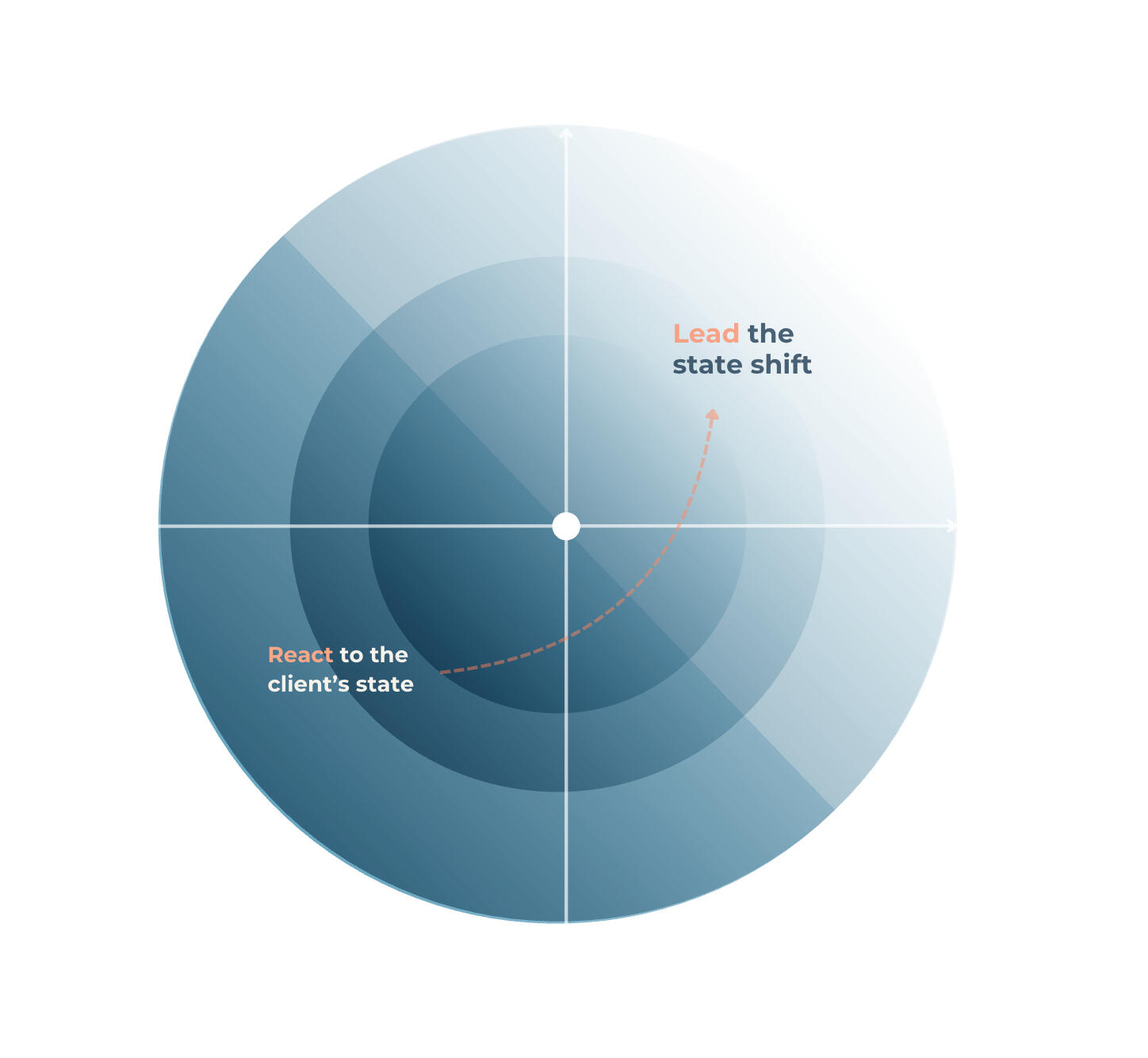
The leverage is in the first 15 minutes: helping the executive move out of cognitive control.
This does not come from better questions alone. It comes from how you lead the opening dynamic of the session.When you can lead that shift, you stop adapting to the executive’s state.
You help create a new one, where deeper work becomes possible.

From MIND to HEART™ Training
What to expect
A free 3-hour in-person training in your city on how to create a state shift in the first 15 minutes of an executive coaching session.In this training, you will:Understand what keeps executive clients in a fast, cognitive mode — and what helps bring more depth earlier in the session.
Observe the method in action through a live coaching demonstration, so you can see what creates the shift.
Experience the shift yourself, and feel how this approach can deepen the impact of your sessions.
Be the first to know
This free in-person training opens city by city across Europe.
Join the waiting list to be the first to know when a session opens in your city.
Each session is limited to 12 practitioners.

Designed and led by
Sébastien Tomàs
Expert in Executive Growth, HEC Paris
For the past 15 years, I have been driven by one question: how can coaching enable fast lasting change?This led me to build several companies and develop models and tools shaped by science, psychology, and years of direct work with leaders.I created The Syntoria Institute to share this work with practitioners who want to create deeper impact, stronger authority, and earlier shifts in their sessions.
© The Syntoria Institute. All rights reserved.
Pour les coachs en leadership
Du MENTAL au COEUR™
Accélérez votre impact avec vos clients dirigeants
Une formation gratuite de 3 heures, en présentiel, pour apprendre à créer un changement d’état dans les 15 premières minutes d’un coaching exécutif.
| FORMAT | DURÉE | PRIX | CAPACITÉ | VILLES |
|---|---|---|---|---|
| En présentiel | 3 heures | Gratuit | 12 par session | Déploiement européen |

— Jessika Klingspor
Executive Coach & Ecosystem Builder
Founder, Nordics in Barcelona
Ce que les coachs disent après la formation
"Avec des dirigeants de haut niveau, très rationnels, les approches de coaching classiques ne suffisent pas à ouvrir un espace de vulnérabilité. Ils ont besoin d’être guidés activement vers un état plus ouvert, plus réceptif.Du MENTAL au CŒUR™ m’a apporté l’assise scientifique et la carte visuelle qui me manquaient pour comprendre comment provoquer un changement d’état puissant, dès le début du coaching. Je peux désormais accompagner mes clients avec assurance pour rapidement les faire sortir du contrôle cognitif et accéder à une vulnérabilité plus profonde, plus incarnée.La formation a été une expérience à part entière : j’ai passé trois heures dans un état de flow où le temps semblait suspendu. Pour tout coach qui cherche à installer d’emblée une vraie crédibilité face à des profils analytiques, je recommande vivement cette formation."
LE PARADOXE DES DIRIGEANTS
Ils veulent des résultats, mais restent en surface
Les dirigeants attendent des avancées rapides et visibles, tout en maintenant la conversation dans une zone maîtrisée, contrôlée et très cognitive.
Résultat : beaucoup de coachs peinent à accéder à une vraie profondeur dans les premières séances.
Ils perdent du temps à attendre que la vulnérabilité émerge, au lieu d’en créer les conditions.
Et l’issue est souvent la même : un impact plus lent, une autorité plus fragile et une profondeur qui se fait attendre.
Les 15 premières minutes
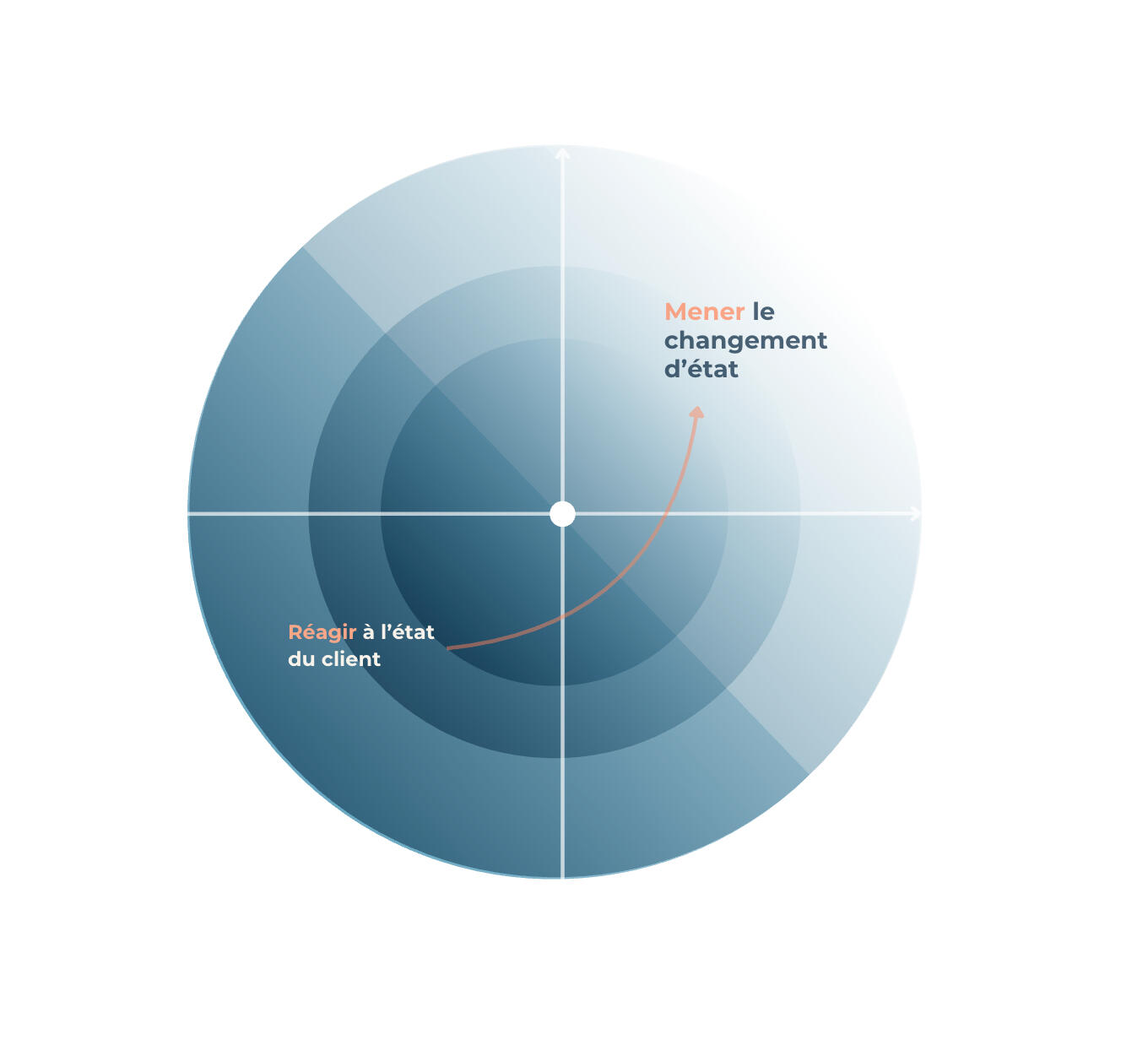
Le véritable levier se joue dans les 15 premières minutes : aider le dirigeant à sortir du contrôle cognitif.
Ce basculement ne vient pas simplement de meilleures questions. Il dépend de la manière dont vous menez la dynamique en début de séance.Quand vous savez mener ce basculement, vous ne vous adaptez plus à l’état du dirigeant. Vous créez un nouvel état, à partir duquel un travail plus profond devient possible.

FORMATION - DU MENTAL au CŒUR™
À quoi vous attendre
Une formation gratuite de 3 heures, en présentiel dans votre ville, pour apprendre à créer un changement d’état dans les 15 premières minutes d’une séance de coaching de dirigeant.Dans cette formation, vous allez :Comprendre ce qui maintient les clients dirigeants dans un mode rapide et très mental, et ce qui permet d’amener plus de profondeur plus tôt dans la séance.
Observer la méthode en action à travers une démonstration de coaching en direct, pour voir concrètement ce qui crée le basculement.
Vivre ce basculement vous-même, et sentir comment cette approche peut accélérer l’impact de vos séances.
Soyez informé en priorité
Cette formation gratuite en présentiel ouvre ville par ville à travers l’Europe.
Rejoignez la liste d’attente pour être informé en priorité lorsqu’une session ouvre dans votre ville.
Chaque session est limitée à 12 praticiens.

Conçu et animé par
Sébastien Tomàs
Expert en coaching executif, HEC Paris
Depuis 15 ans, une même question guide mon travail : comment le coaching peut-il permettre des transformations à la fois rapides et durables ?C’est cette recherche qui m’a conduit à créer plusieurs entreprises, puis à développer des modèles et des outils à la croisée de la science, de la psychologie et d’années de travail au contact direct de dirigeants.J’ai fondé The Syntoria Institute pour transmettre ce travail à des praticiens qui veulent créer un impact plus profond, renforcer leur assise dans leurs séances, et faire émerger plus tôt de vrais basculements chez leurs clients.
© The Syntoria Institute. All rights reserved.